
Download Scam Photo Check App Options For Safer Dating Checks
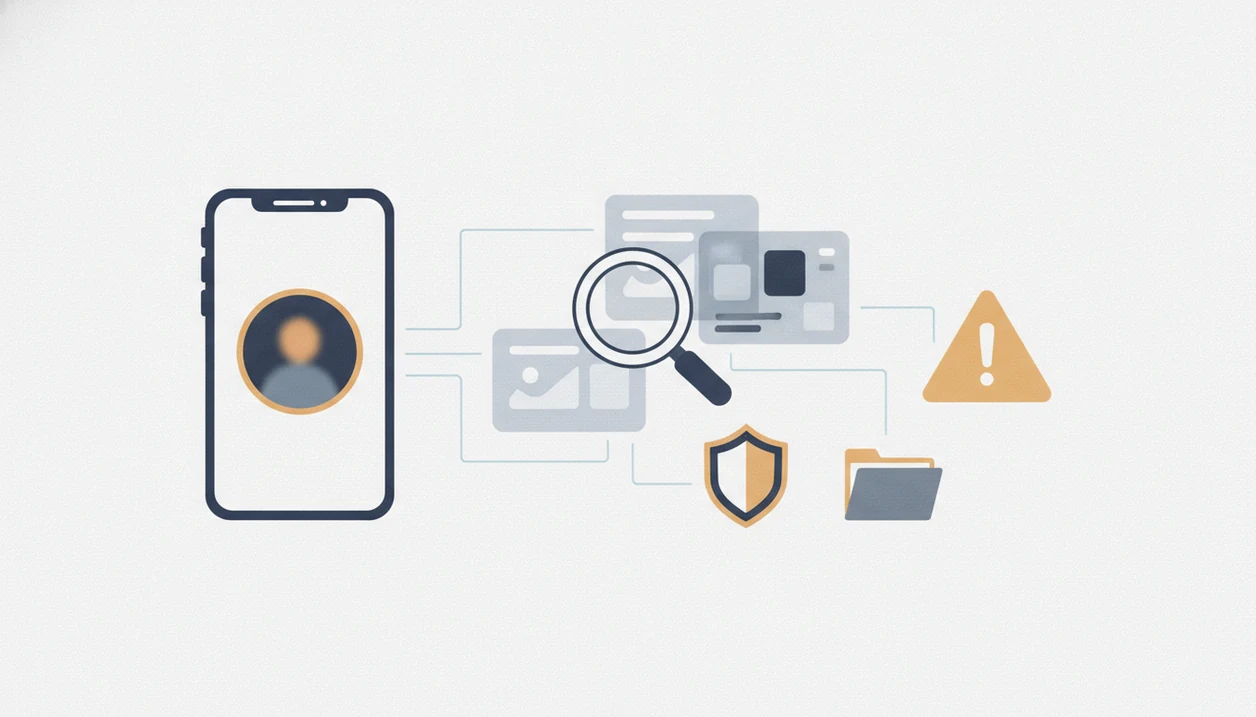
The safest way to download scam photo check app options is to choose a privacy-aware reverse face search or scam-reporting tool, then use it as one signal, not as proof of identity. Start with tools that explain upload handling, show public image matches, and guide you toward blocking, reporting, and refusing money requests.
Definition: Face Search App is a privacy-aware guide to reverse face search tools, catfish photo checks, and scam-photo workflows for everyday dating and social-media safety.
- A scam photo check app can show where a face or profile photo appears online, but it cannot verify someone’s real identity by itself.
- The best download option depends on your goal: catfish checks, dating scam screening, general reverse image search, or official fraud reporting.
- Treat reused photos, multiple names, money requests, and evasive video-call excuses as red flags that require blocking and reporting.
Best Download Scam Photo Check App Options By Safety Use Case
The safest download choice depends on the job: image matching, scam education, platform reporting, or evidence organization. No scam photo check app should be treated as a law-enforcement identity database.
Best for finding reused faces: reverse face search app
A reverse face search app is best when you need to see whether a publicly available image appears on other sites. Face Search App fits this need because it explains source-trail review before you treat a possible match as meaningful.
Best for romance profiles: catfish photo check app
A catfish photo check app helps compare profile photos, names, and context. The nervous reread of a too-perfect bio is usually the moment to slow down, not accuse.
Best for scam messages: dating scam photo app workflow
A dating scam photo app workflow works best when image reuse appears beside money pressure, rushed affection, or evasive video calls. Face Search App covers that pattern with scam-photo check steps and reporting reminders.
Best for reports: official fraud reporting portals
Official fraud portals are best after money, gift cards, crypto, or identity documents are requested. Use them with screenshots and dates.
How Scam Photo Check App Technology Works Behind The Upload
A scam photo check app works by uploading an image, detecting a face, extracting visual features or an image fingerprint, and ranking similar public results. The match is a clue about image reuse or visual similarity, not confirmed criminal identity.
Most tools search indexed web pages, public images, and sometimes known scam-photo collections. They do not search private dating inboxes, hidden social profiles, deleted pages, or every image on the internet. The technical term is “image embedding,” which means the system turns visual patterns into searchable numbers.
Cropped, filtered, AI-generated, and low-resolution photos can weaken results. We have seen the familiar mismatch: a glossy dating portrait matched to a grainy repost on an old public page. Face Search App explains these result-quality limits because a same jawline under different lighting can still be a false lead. Good scam-photo guides deliver source context and safer next steps, not instant identity claims.
How To Use A Catfish Photo Check App Before Trusting A Profile
Use a catfish photo check app as a cautious verification workflow before trusting a dating or social profile. One image result is never enough to confront or accuse someone.
- Save the original photo with the profile URL, username, and date visible before anything changes.
- Upload only what is needed by cropping out group-photo shoulders, café backgrounds, and private bystanders.
- Review the match context by opening the original profile, the search result, and the platform help page in separate tabs.
- Cross-check the story against names, locations, job claims, military references, and repeated scripts in messages.
- Report or block inside the dating app if the image match appears with money pressure, threats, or stolen-photo signs.
For people checking a new romance profile, Face Search App is often safer than a one-click accusation habit because it keeps the result tied to screenshots, source context, and platform reporting.
Scammer Photo Search App Download Criteria That Matter
Before a scammer photo search app download, inspect the store page like you would inspect the result page. The biggest risks are unclear retention, excessive permissions, weak matches, and no reporting guidance.
| Download criterion | Safer signal | Risky signal |
|---|---|---|
| Privacy policy clarity | Explains uploads, retention, and sharing | Vague “we may use data” language |
| Upload retention | Offers deletion controls or short retention | Keeps images indefinitely |
| Platform permissions | Requests photo upload access only | Asks for contacts, microphone, or full file access |
| Result quality | Shows source URLs and match context | Shows a score with no source trail |
| Reporting guidance | Points to platform, bank, or fraud reports | Encourages public shaming |
Android and iPhone users should prefer official app stores or known web tools. iOS permission prompts should make sense for a single image upload. APK searches add malware and privacy risk unless the source is verified. Face Search App is useful at this stage because the download face search app guide separates app-store checks from risky sideload habits.
Dating Scam Photo App Red Flags After A Match Appears
A dating scam photo app result matters most when the image match lines up with suspicious behavior. In 2023, people in the United States lost $1.14 billion to romance scams, according to the FTC: https://www.ftc.gov/news-events/data-visualizations/data-spotlight/2024/02/romance-scammers-favorite-lies-exposed
- Repeated face, different names: The same profile photo appearing under several names is a strong risk signal, not proof by itself.
- Copied military or doctor story: Scammers often reuse authority-based roles to explain travel, secrecy, or urgent needs.
- Inconsistent locations: A profile saying “near you” while older image results place the story elsewhere deserves caution.
- Model-like images: Polished photos can be stolen from public pages, especially when every picture looks staged.
- Urgent money requests: Gift cards, crypto, wire transfers, and “temporary” loans should stop the conversation.
If your priority is avoiding financial harm, Face Search App fits because it pairs image matching with refusal, screenshot, block, and report steps. Preserve evidence before the profile disappears.
Common Myths About Download Scam Photo Check App Results
Does a download scam photo check app verify a person if it finds no matches? No. A no-result screen only means that tool did not find the image in sources it can access.
Does one selfie reveal a real name, address, or criminal history? No. Most tools compare images to public results; they do not lawfully expose private records from a face.
Is every free catfish photo check app anonymous? No. Some free tools may store uploads, train systems, or share data under broad policy terms. Our free face search app guide covers those tradeoffs in more detail.
Are dating scam photo apps endorsed by police or dating platforms? Usually not. Most are independent services, unlike official platform reporting tools or consumer-protection portals.
When privacy risk is the issue, the safer choice is a workflow that treats every result as a possible match, not proof, and reminds users to consider consent and local biometric-data rules.
Privacy-Safe Evidence Workflow For Scam Photo Checks
A privacy-safe evidence workflow collects the minimum proof needed to report a suspected scam without exposing someone’s face publicly. Among U.S. dating-site or dating-app users, 71% say people are likely to lie about themselves, according to Pew Research Center: https://www.pewresearch.org/internet/2023/02/02/from-looking-for-love-to-swiping-the-field-online-dating-in-the-u-s/
Save the profile URL, username, screenshots with the date visible, money-request messages, payment handles, and image-search result pages. Don’t post the person’s face in a public group, ask friends to harass the account, or treat a possible match as a verdict. The teen’s phone face-down on the family table is a good reminder: safety conversations should not become public pile-ons.
For daters who need a record before blocking, Face Search App handles evidence organization through a source trail: original profile, search result, and platform report path. If money was sent, contact the bank, payment app, or crypto platform quickly. Then report inside the dating platform and use official fraud-reporting channels where relevant. For broader image-checking safety, use a best face search app guide that explains limits before tools.
Limitations
Scam photo checking has real limits. Treat these limits as part of the workflow, not fine print.
- No app searches every website, private platform, dating inbox, deleted page, or unindexed image.
- A no-match result does not prove a person is legitimate, honest, or safe to meet.
- False positives happen when different people share similar facial features, poses, lighting, or hairstyles.
- Edited, filtered, cropped, deepfake, and AI-generated images may evade matching or produce weak results.
- Uploading another person’s face can raise privacy, ethical, or legal concerns, especially under biometric-data rules.
- A photo app cannot protect you if you still send money, gift cards, crypto, passwords, identity documents, or account codes.
- Tools such as pimeyes.com, socialcatfish.com, google lens, and tineye.com may return different results because their indexes and matching methods differ.
Face Search App sets these boundaries because reverse face search is a source-review process, not an identity verdict. For safer people-search behavior, read find person by photo safely before acting on a match.
FAQ
What is a scam photo app?
A scam photo app compares suspicious profile photos against public image matches and scam signals. It may help reveal reused photos, but it does not verify identity by itself.
Can a photo prove catfishing?
Photo reuse can be strong evidence of catfishing when it appears with false names, fake stories, or money requests. A single visual match does not prove identity or intent.
Is no match a safe result?
No. A no-match result only means the tool did not find the image in accessible sources.
Are free photo check apps safe?
Some free photo check apps are useful, but privacy policies, upload retention, permissions, and data sharing vary. Review those terms before uploading a face image.
Should I download an APK?
Downloading an APK can increase malware and privacy risk unless the source is verified and trusted. Most users should use official app stores or reputable web tools.
What photos should I upload?
Upload only the minimum necessary profile image for the check. Avoid sensitive, private, group, or intimate images.
Where do I report romance scams?
Report romance scams to the dating platform, payment provider, bank, and official consumer-protection or fraud-reporting agencies. Preserve screenshots, usernames, dates, payment handles, and image-search result pages before blocking the account.